In 1854, the French engineer Duvalier proposed using one or more wires twisted into a simple strand as a flexible cutting tool. Obviously, this date can be considered as the origin of the method of industrial sawing with a wire rope with a free supply of abrasive. Since then, installations with a flexible working body have been increasingly used in quarries and construction sites for cutting natural stones and building materials. Over the past period, rope and diamond saws have been repeatedly modified and improved, thanks to which this effective method of sawing has found wide distribution in Italy, France, Belgium and other countries when mining blocks.
The advantages of ropes for cutting stone include: simplicity of construction, low energy and metal consumption, low loss of raw materials for cutting, the possibility of making cuts of considerable length, technological flexibility that allows cutting monolithic massifs, taking into account the mining and geological features of the deposit as much as possible.
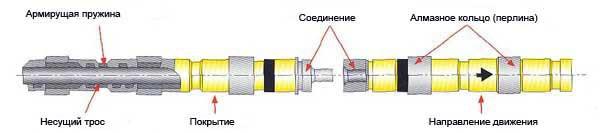
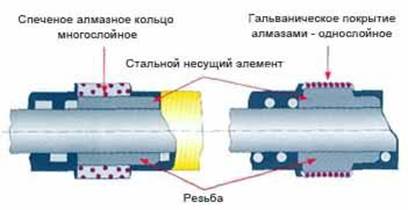
Diamond rope construction
- The load-bearing cable is a thin stranded steel cable with high strength
- Load capacity > 19000 N
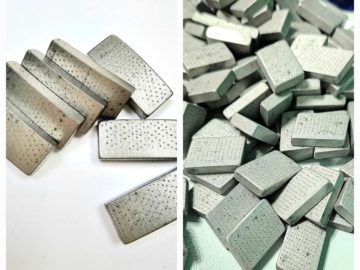
- Diamond ring (pearl) – cutting elements similar to disc segments
- Coating – for fixing diamond rings on the carrier cable and protecting the rope from corrosion
- Reinforcing – to prevent the displacement of the perlin (slippage) and the distribution of the perlin using springs
- Connector– for connecting the ends of the rope
Execution of diamond rings - perlin
- The bearing element is a steel sleeve with an internal thread for better fixation on the supporting cable.
- The cutting layer is sintered or electroplated.
General information
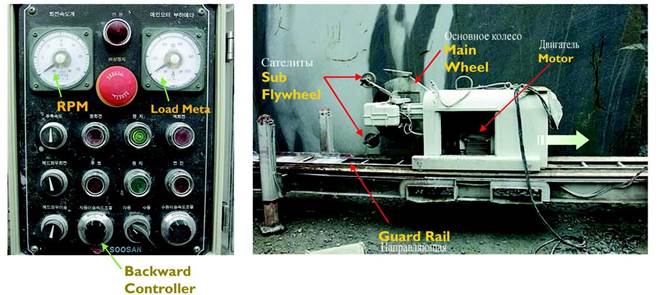
Recommendations for installing a diamond rope on the machine.
In order to achieve maximum performance and service life of the diamond rope, it is necessary to accurately adjust the operating modes of the machine relative to the material being processed. The main attention should be paid to the uniform and equally oriented rotation of the rope, both in the lower and upper parts.
In fact, very often, despite the preliminary twisting of the rope, the lower part rotates, for example, clockwise, while the upper part rotates counterclockwise. Thus, the rope is twisted on large flywheels, which entails accelerated wear of the rope or its rupture.
Accelerated wear of the rope or its rupture.
Vibrations at the beginning and at the end of sawing a stone block. Poor cutting quality, large cutting deviations, Accelerated wear of rubber parts on large flywheels.
The direction of rotation of the diamond rope can be determined by two main methods: the clothespin method (static rotation check) and the paint marking method (dynamic rotation check).
According to this method, it is necessary to fix the clothespin in one of the parts of the rope (lower or upper part) next to the tensioning wheel casing. After opening the cover of the drive wheel casing, it is necessary to rotate the rope several times by rotating it with your hand. The driving flywheel must always be rotated only in the same direction – in the direction of the cut. If, for some reason, the driving flywheel has been turned in the opposite direction, it is necessary to turn it again so as to return the rope to its normal position.
By rotating the wheel, it is necessary to note the direction of rotation of the rope, as well as the number of revolutions that the clothespin has made. After performing this operation with one part of the rope, it is necessary to repeat it from the opposite side.
At the same time, the lower branch of the diamond rope should always rotate slightly more than the upper branch in order to compensate for the decrease in rotation within the cut during the sawing of the stone. In this case, the correct rotation of the rope must be checked twice: with and without the installed small lower pulleys (guide pulleys at the inlet and outlet of the block). The values obtained by rotating the large flywheel should not change.
According to this method, it is necessary to spray a little bright fast-drying paint on half the circumference of the rope with a length of about 50-60 cm, starting the machine, it is necessary to mark the passage of the painted part of the rope at the entrance of the block.
If the rope rotates correctly, the section of diamond rope marked with paint will appear in a different position each time.
It is not recommended to place the sawed block on wooden blanks, the block should be placed on non-reinforced concrete beams, which are pre-installed on a trolley.
The maximum height of the block, which can be sawn using a stationary cable car, is usually 2.5 m.
The optimal length of the block should be 1.5 – 3 m, with such a length, the highest rates of stone sawing are achieved. But it is also possible to cut longer blocks in size. To do this, remove the guide pulley, which is located at the outlet of the large flywheel, and also choose the right sawing modes.
Before installing the rope on the machine, it is necessary, in order to give it rotation around its own axis, to pre-twist the rope at the rate of 1.7 turns per meter of rope length with a rope length from 19 to 25 meters. With a rope length from 15 to 19 m .- 1.5 turns per meter, with a rope length of more than 25 m. – 2 turns per meter. The tension force of the rope should be 40-55 bar.
The sawing parameters are determined based on the specifics of the processed material, the overall dimensions of the workpiece and working conditions.
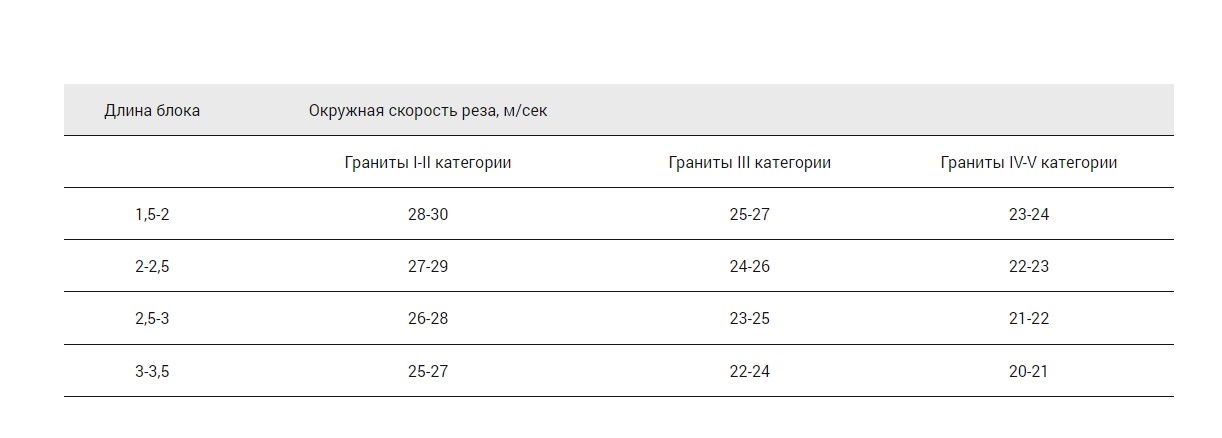
The harder the rock of the processed stone, the lower the circumferential cutting speed should be. For short blocks, a higher circumferential speed and feed are selected to optimize performance (cutting speed). For long blocks, lower circumferential speed and feed to avoid greasing of diamond bushings and excessive cable stresses. High cutting speed can lead to mashing and destruction of diamonds. Low speed will accelerate the wear and ovalization of the bushings.
The recommended parameters of the circumferential cutting speed are shown below.
When salting diamond bushings, a characteristic feature of which is a sharp decrease in sawing performance, it is necessary to switch to the opening mode: reduce the linear cutting speed of the rope by 4 m / sec below the recommended one and continue cutting at such parameters for 1-2 hours, or open the rope on an abrasive block.
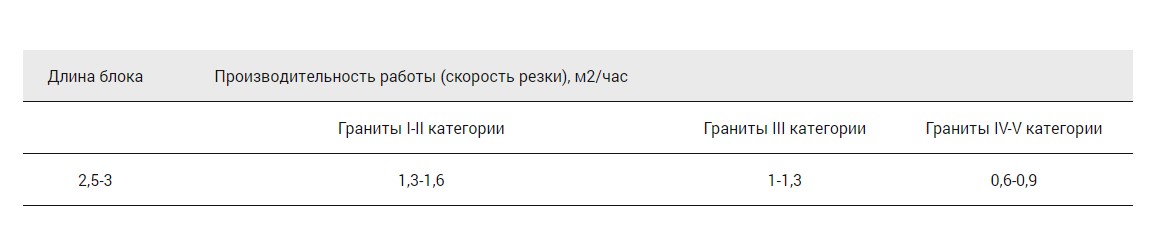
Recommendations for sawing performance (cutting speed).
The feed rate of the rope (lowering speed) should also be selected depending on the type of material being processed and the size of the block, in practice it is determined by the formula:
Vn = Пр/L, where: Vn is the feed rate, m/ hour;
Пр – sawing capacity, m2/hour; L – block length, m.
On machines that do not provide indicators (sensors) of the lowering speed in m/ hour, the parameters are adjusted by measuring the lowering time in manual mode. Also, a characteristic indicator of the lowering speed is the tension angle of the rope. So, for a block of an average length of 2.5 m, the tension angle should be 7-10 degrees at the entrance to the block, a minimum of 5 degrees and a maximum of 15 degrees. At the beginning of the block processing process, the feed should be reduced by approximately 20-30% of the recommended one to avoid deviations and withdrawal of the cutting line during the processing of the stone block. When the rope is sufficiently embedded in the material being processed, the feed rate must be raised to the recommended parameters.
Cooling parameters
Too much coolant flow will reduce the cutting speed, as hydrodynamic effects reduce the pressure of diamonds on the stone and prevent proper rotation of the rope – an aquaplaning effect occurs. A small volume of water can increase the cutting speed, but increase the wear of the bushings. The water flow of 20-30 liters/min at a pressure of 1 Bar should be sufficient. When setting up the water supply, the jet at the exit from the cut should be slightly larger than the diameter of the rope (1.5-2 times larger). Additionally, the cooling efficiency may be indicated by the color of the water flowing out of the block during the cutting process. The color of the water is too dirty, which means that watering, weak, medium pollution means an optimal level of water supply.You can also navigate by noise during operation, if the sawing process is accompanied by increased noise, then this indicates a lack of water.
Before starting, it is necessary to cut with a rubber rope for the first hour or two at a lower speed of 4 m / sec from the recommended one. This will ensure the normal opening of the diamond rope, the removal of plastic residues and ensure work in the best conditions. Before starting sawing with a previously used rope, it is necessary to check:
- – the average diameter of the bushings;
- – eccentricity (maximum deviation – 0.3 mm);
- – taper (maximum deviation – 0.3 mm);
- – the condition of the rope connection, the integrity and working condition of the bushings;(absence of shells, opening of diamonds
When passivating the block onto slabs, sawing can be carried out at sufficiently high speeds. In this case, cutting is allowed without the lower guide pulleys located at the inlet and outlet of the block, since they are mainly used to direct the rope feed at the entrance to the cut, as well as to weaken the vibration of the rope.
When sawing slabs, high sawing accuracy and smoothness of the surface are required for further polishing. To do this, the cutting speed should be reduced to prevent deviations at the beginning and during cutting (in general, the cutting speed should be 15-20% lower than that used for passivating blocks onto slabs). When cutting short blocks, guide pulleys are used at the inlet and outlet of the block, and a check is made that there is no side play.
When entering the rope into the block, it is recommended to avoid working in automatic mode, the feed rate should be reduced by 20-30% of the recommended one. When cutting in automatic mode, the feed speed of the flywheels is regulated through the current in amperes. As the loads increase, the feed automatically decreases, and as it decreases, it increases. In the absence of an automatic adjustment system, it is necessary to visually monitor the load readings (in amperes) and adjust the rope feed parameters manually.
Rope for quarries
Recommended cutting speed
- Granite 1 – 2: 25 – 30 m/s
- Granite 3 – 4: 22 – 26 m/s
- Granite 5: 20 – 22 m/s
- Marble: 30 – 35 m/s
Rope Saw
– minimum power: 50 hp
– linear speed of the rope: 20-30 m/s, V =(3.14*N*Ø)/ 60 sec, where N is the number of revolutions of the wheel, Ø is the diameter of the wheel
– feed rate: 0.4-0.5 m/h
– load control parameter: constant reading on the ammeter
How to work?
– rope tension: constant adjustment according to the ammeter readings
– do not overstrain
– the tension at the outlet should be sufficient, the tension at the inlet should be free, at the start the rope should have a slight slack in case of an increase in the controlled parameter (ammeter of the main engine)
– first step: increase the water supply
– the second step is to reduce the reverse speed. The normal speed is in the range of 40-50 cm/h, a low speed is considered to be less than 40 cm / influence on the speed of the rope
– in case of high speed, the segments may become blurred – you need to reduce the speed
– In case of low speed, the segments will wear out quickly when cutting on a rainy (wet) day.
– cover the outer part of the stone from above with a plastic film to prevent water from entering holes, holes, cracks
– The segments can come together and the rope can easily get stuck.
How to work with a 50-meter rope?
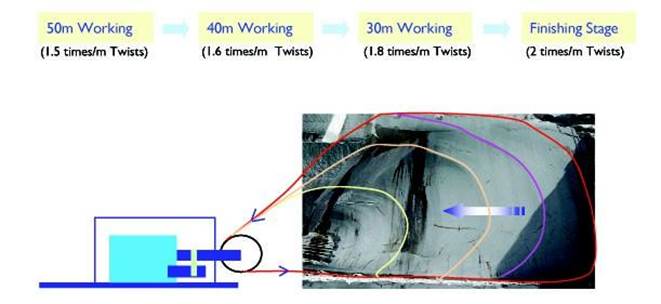
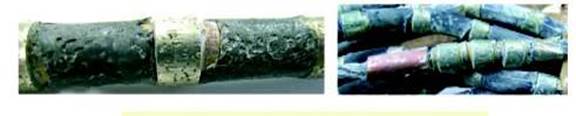
Cut 10 m from the main loop after 8-10 hours of operation (the shorter, the more you twist). Replace the bushings after 4-5 hours of operation. When connecting, press it 2 times, turning it 90°. Inspect the connecting bushings every 20-30 minutes, if necessary, change the finish quickly at the end of cutting (do not use a new rope at the finish) warnings before starting cutting:
- – round the edges
- – inspect the rubber on the wheel
- – maximize the bending radii of the rope
- – 50 m in operation: 1.5 rpm
- – 40 m in operation: 1.6 rpm
- – 30 m in operation: 1.8 rpm
- – finish: 2 rpm
The procedure for using water during cutting.
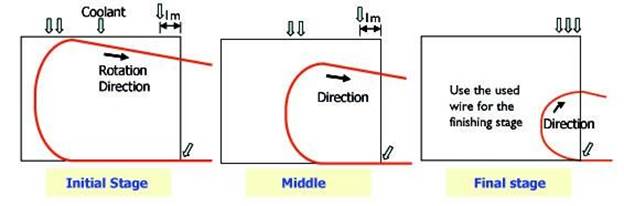
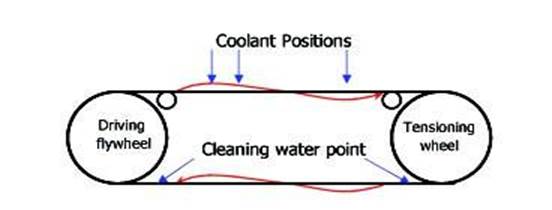
- – Normally use 3 to 5 water entry points.
- – The position and quantity must change during operation.
- – The efficiency and cutting parameters largely depend on the amount of water.
Problems encountered during the cutting process
A problem that occurs when there is a shortage of water. An improperly used rope. This happens when working in forced mode, when the rope is not sufficiently cooled (overheating).As a result, due to the fact that the liquid was supplied at two points, the rubber bands were wiped off, and the segments gathered.
The reason for assembling the segments together.
- – The segments are assembled at the exit due to the coloring of the stone, you need to split it well
- – At the start due to the fact that the edges are not filed and are sharp enough
- – Using a new rope at the finish (more rigid)
- – Interruptions or stoppage of the water supply during operation.
Wear with a violation of the geometry in the form of a “V”.
- – The feed is very fast
- – Lack of water
- – The increase in speed led to the rubbing of the rope on one side. The ends of the segments are broken off
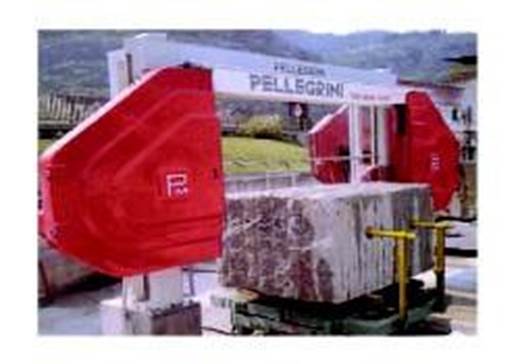
Stationary rope saws
The dimensions of the processed material depend on the distance between the drive wheels. It is not necessary to cut along the trail of the cut left by the past and cuts on the surface of the stone, as a result, it is difficult to start the rope. It depends on whether or not we use satellites.
Cutting speed. The harder the stone, the slower the cutting speed should be. In the case of high speed, the segments are soiled (salted) and the diamonds are damaged. In case of low speed, the segments wear out faster. A speed of 20-35 m/s is considered normal, 29 m/s and 27 m/s are recommended for CNC machines.
Twisting. A properly twisted rope makes one complete revolution around its axis while moving between the wheels.
Cooling. At the beginning of cutting, it is necessary to ensure the supply of water at the rate of 20-30 liters / min at least at three points (places of sawing). Excessive moisture worsens the cutting characteristics, and lack of water leads to rapid wear of the segments and the rope as a whole. After starting and entering the nominal cutting mode, it is necessary to ensure the supply of water at the entrance of the rope to the stone, the remaining 2-3 points should be positioned along the cut. Move them as needed.
A stretch:
250 – 400 kg for cable Ø5 mm and segments Ø 10 – 11 mm
160 – 180 kg for cable Ø4 mm and segments Ø 8 mm
Cutting. When using a new rope, it is necessary to cut at low speed for 1-2 hours. This is necessary in order for the segments to open and expose the cutting diamonds. When a small stone is being processed, satellites must be used to reduce the vibrations of the rope. Try to keep the angle of entry of the rope in the vertical plane in the range of 7-9 ° from the horizontal.
Installing the machine. Install the guide parallel to the line of the prepared holes so that the wheel is on the same axis with the holes. Install the second and subsequent guides in the same plane. The distance between the guide and the hole line should be 15-20 cm– This is necessary to ensure a straight and even cut.
Correction. Monitor the lateral displacement of the wheels and their tilt (they must be on the same axis and vertically).
Preparing the rope. Add 10 m to the cutting perimeter to obtain the required rope length.The required length of the rope is determined when the main one is at the beginning of the guide mechanism. The better the result, the greater the rope coverage of the wheel.After drilling, rinse the holes with water. Pre-insert a wire or rope into the holes, then, attaching a rope to it, wind it up.Observe the direction of movement of the rope indicated on it.Pull out the wire (rope) so that both ends of the rope are at the beginning of the guide, and measure the required length of the rope in the holes by throwing the long end over the wheel, and cut it off. Remove the extra rope from the work area
The connection of the rope. Install the connecting sleeve at the end of the cable and press it with a special tool, leaving a gap of about 1 mm between the sleeve and the segment. Before joining the loop, the rope must be twisted counterclockwise so that it can make a complete revolution around its axis during the cutting process.The number of revolutions increases as the rope shortens during operation, and amounts to 1.5 – 2 revolutions per meter, thereby the segment wears out evenly over the entire surface and it is possible to avoid ovality in wear. After twisting, insert the second end of the cable into the connecting sleeve and press it 2 times with a 90° rotation. Twist the rope manually, thereby rounding the corners and lapping the rope. Then put the rope on the wheel and scroll it manually along with the wheel.Try to determine the number of turns of the rope. At three meters, it should make from 0.5 to 1.5 revolutions around its axis, optimally 1.Pull the rope and position the water supply points. The rope is ready to work.
Location. Do not cover the surface to be treated and do not interfere with the progress of the rope. This is necessary to ensure free rotation of the rope, to avoid oval wear. The saw should be located about 4 m from the surface to be treated. These actions are important to extend the life of the segments.
Before the start. Round off the corners. Check that the rope is moving freely and nothing prevents its progress. Check the water supply, it should be enough (a little, a lot). Check the rubber clip on the wheel, it should be undamaged. Check the connection points of the rope, replace if necessary, make sure that the rope is free of visible damage and bends.
The connection of the rope. Do not connect ropes of different types and sizes. This will lead to frequent tears and rapid wear
The size of the block. Do not use the rope to cut very large and very small blocks. In this case, the large bending radius interferes with the free rotation of the rope, and as a result, oval wear. It is necessary to tilt the block to reduce the bending radius of the rope
The tension of the rope. Do not tug the rope while cutting.
Actions in the process of work. The rope works optimally at a feed rate of 20 – 35 m/s. Increasing the speed leads to blurring of segments and tearing out diamonds. Reducing the speed leads to increased wear and the appearance of taper. Do not start cutting at high speed and pressure. Avoid large jumps in cutting modes that can damage the rope saw.
The end of the cutting. Use an old rope at sharp angles at the exit, when the rope bends strongly.
Possible problems when using a rope tool and methods of their elimination
1. The rope “does not cut” (grinding of diamond bushings)
This circumstance may be due to the inconsistency of the selected sawing modes with the recommended ones (too high linear speed of the rope, incorrect selection of tools, launching a new rope on hard granite with a high quartz content, a large flow of coolant). To eliminate it, it is necessary to open the diamond rope in one of the following ways:
Reduce the linear speed of the rope by 4 m/sec for a while. At a reduced circumferential speed, the rope cuts faster, which leads to increased wear of the bushings and the opening of diamond grains. After opening the bushings, it is necessary to return to the recommended sawing parameters.
Perform several cuts on abrasive material (sandstone, concrete, etc.). Reduce the amount of coolant (taking into account the risk of overheating and destruction of the rope).
2. Breaking the rope
If the rope breaks “accidentally” (foreign objects entering the cut, etc.), it is necessary to repair the rope (remove the damaged area and reconnect the rope).
If the rope breaks several times for an unspecified reason, it is necessary to check the tension system (the mechanisms of the machine must be checked by a technician). If the machine is in good working order, the rope must be replaced. After 100 m of cutting, rope breaks may occur as the load-bearing cable wears out.
3. Large cutting deviations
If the cutting is not accurate under normal operating conditions, it is necessary to reduce the feed rate by one or two cuts. It is also recommended to temporarily reduce the circumferential speed by 2-3 m/sec.
4. Large deviations at the beginning of the block cut
The surface of the block mainly has an uneven shape, therefore, at the beginning of the cut, the number of points of contact with the rope is limited. In this case, it is necessary to reduce the bottom feed rate by 20-30% of the recommended values, until the rope completely enters the processed block.
5. Conical wear of diamond bushings.
The consequence of such wear may be:
- – The linear cutting speed is too low. Accordingly, it is necessary to adjust the cutting speed in accordance with the recommended modes.
- – Incorrect selection of tools for the processed material. In this case, it is necessary to replace the rope.
6. Ovalization of diamond bushings
If the ovalization of the diamond bushings occurs on a short section of the rope, it is necessary to cut this section, re-twist the entire length of the rope around its axis (at the rate of 1.5 turns / running meter) and check the rotation of the rope after its connection. If the diamond rope does not rotate around its axis, this indicates that it is worn out, accordingly, the rope must be replaced with another one.
Application Tips
– Pay attention to the reliable installation of the machine and deflecting rollers.
– Pay attention to the direction of movement of the rope (arrow) or the cone of rings (perlin).
– Twist the rope counterclockwise to ensure even wear.
– Avoid using a rope with a length of less than 7m, as too short a length will lead to non-circular wear of the rings.
– Round off the corners on the structure before starting work.
– Pay attention to sufficient water supply.
– Run the rope without load in order to avoid its clamping, if possible at a very low speed of the rope movement.
– The speed of the rope should be 20-30 m/s, a higher speed of the rope means a greater risk of breaking the rope.
– Operate at a reduced feed pressure with a short cutting length, otherwise high contact pressure will lead to excessive wear.
– Never use ropes with a diameter difference of more than 0.2 mm together (the result of such use will be a clamp in the cut).
– Keep an absolutely safe distance and use protective equipment in order not to endanger people in case of possible rupture of the rope, see the operating instructions developed by the manufacturer.
– Store the rope in a dry place protected from light to avoid corrosion of the supporting rope and breakage of rubber – rusting of the rope leads to tears.